Jun 04,2025

Affordable Pultrusion Machine Prices Low Cost Solutions

  • Introduction to Pultrusion Machines and Cost Factors
  • Technical Advantages Driving Modern Machine Performance
  • Market Data Analysis: Investment vs. Operational Efficiency
  • Leading Manufacturer Comparison for Industrial Buyers
  • Customization Options for Production Requirements
  • Real-World Application Success Stories
  • Strategic Purchasing Guidance for Pultrusion Equipment
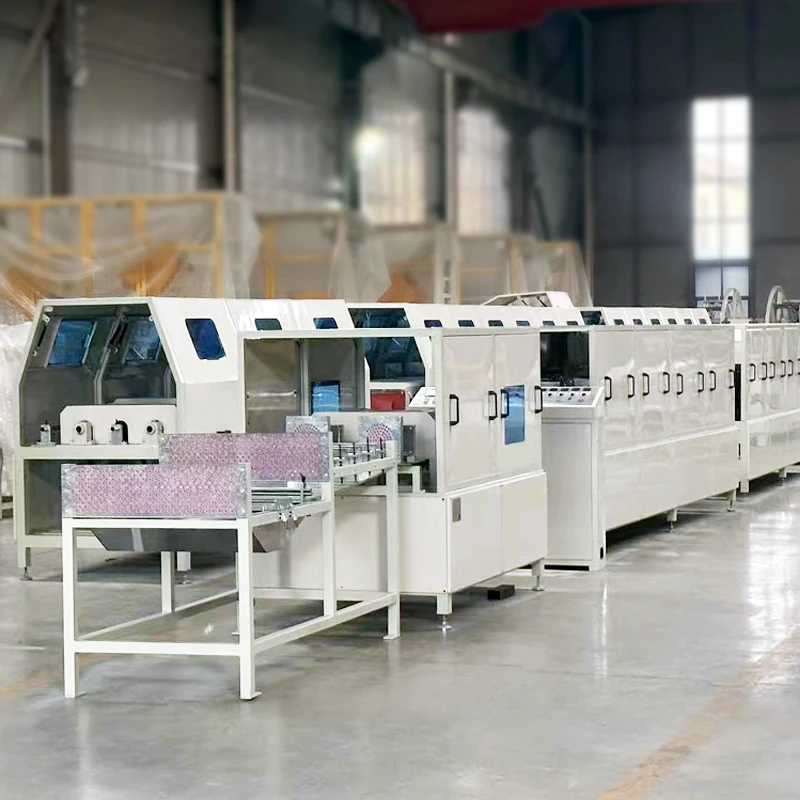
pultrusion machine price

(pultrusion machine price)


Understanding Pultrusion Machine Price Variables

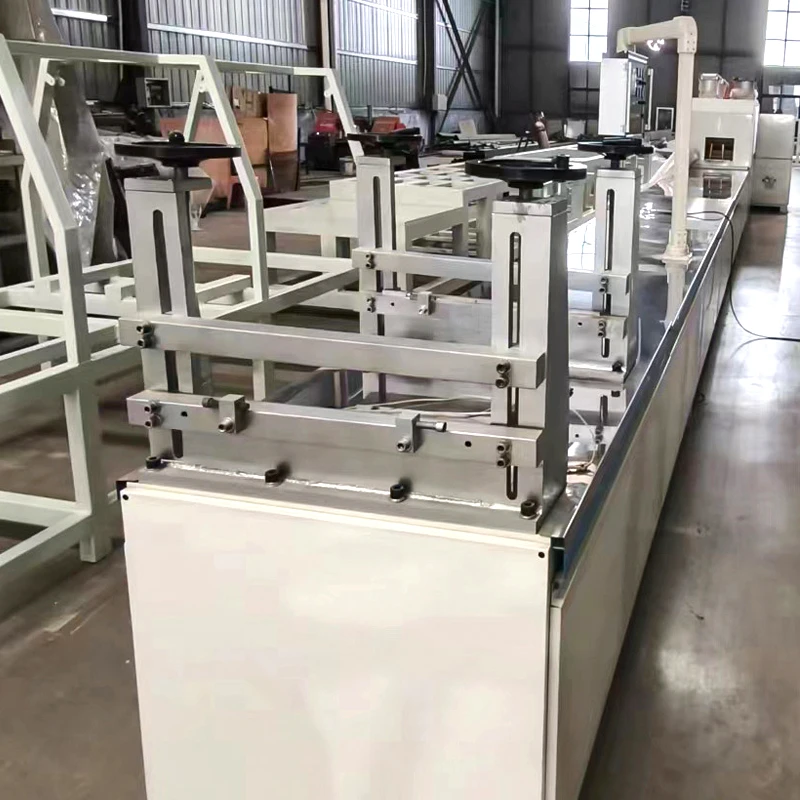
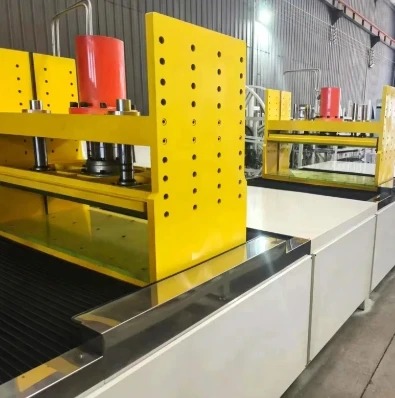
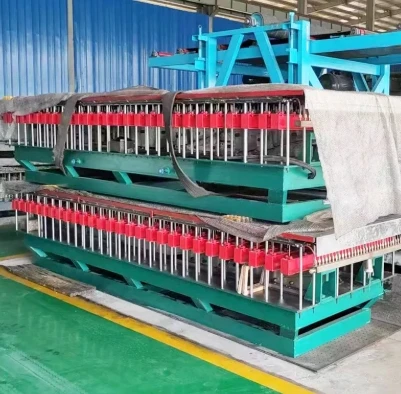
The cost spectrum for pultrusion equipment spans $50,000 to over $600,000 based on technical specifications. Key price determinants include production capacity (measured in kg/hour), curing mechanism, and automation levels. Entry-level manual machines for simple profiles start around $75,000, while integrated systems with robotic handling and precision control commonly exceed $350,000. Material versatility also impacts pricing; GRP pultrusion machines with specialized creel systems demand 18-25% premium over standard models.

Secondary financial considerations often overlooked include:

  • Energy consumption (35-45 kW average for mid-range equipment)
  • Tooling investments ($8,000-$25,000 per die set)
  • Installation and commissioning fees (5-8% of machine cost)
  • Annual maintenance contracts ($6,000-$15,000)

Global manufacturing data reveals regional variations with Chinese-sourced equipment typically 20-30% below Western equivalents, though European machines demonstrate longer operational lifespans (15+ years vs. 10-year average).

Technological Innovation in Composite Manufacturing

Contemporary pultrusion systems incorporate PLC-controlled viscosity management and infrared pre-heating stations, reducing material waste by 12-18%. Advanced models feature:

  • Automated resin impregnation with ±1.5% flow accuracy
  • Modular temperature zones (±2°C tolerance)
  • Self-calibrating puller systems (0.2mm/m dimensional stability)

The transition to Industry 4.0 architecture enables predictive maintenance algorithms that decrease downtime by 40%. For GRP pultrusion machine operations, integrated UV curing units accelerate cycle times by 15-22% compared to thermal-only systems. These innovations yield 300-450% ROI within 3-5 years through increased throughput and reduced rejection rates.

Financial Analysis of Equipment Investment

Comparative operational data demonstrates significant cost disparities:

SpecificationBudget Tier ($85k-$150k)Mid-Range ($220k-$350k)Premium ($450k-$600k+)
Output Capacity15-25 kg/hour40-65 kg/hour90-150 kg/hour
Energy Consumption28 kW/hour42 kW/hour68 kW/hour
Labor Requirements3 operators2 operators1 operator
Scrap Rate8-12%4-7%1.5-3%
Annual Output Value$350k-$550k$1.2M-$1.8M$3M-$4.5M

This data highlights how premium automation reduces per-unit costs despite higher initial pultrusion machine price
points. The breakeven threshold typically occurs at 18-24 months for mid-market equipment operating at 65% utilization.

Industrial Manufacturer Comparison

ManufacturerPrice RangeLead TimeKey TechnologyService Network
North American Brand A$310k-$575k5-7 monthsAI-assisted quality control85 countries
European Brand B$350k-$625k7-9 monthsHybrid curing system62 countries
Asian Brand C$95k-$250k3-4 monthsBasic PLC control38 countries
Specialized Brand D$420k-$780k10-12 monthsRobotic profile handlingGlobal premium

Recent performance benchmarking shows European manufacturers achieving 92-96% operational efficiency versus 84-88% for economy models. For GRP pultrusion machine applications, Brand A's proprietary surface finishing technology reduces secondary processing costs by $17/meter.

Custom Engineering Solutions

When evaluating pultrusion machines for sale, 68% of industrial purchasers require modifications. Common customizations include:

  • Profile-specific guidance systems ($12k-$35k upgrade)
  • Multi-resin capability stations ($45k-$80k)
  • Production monitoring integration ($28k-$52k)

For bridge component manufacturing, customized machines achieve 3.5m/minute pull speeds with reinforced tensioning systems. Specialized cooling configurations enable continuous 24/7 operation without thermal distortion. These engineered solutions typically increase base prices by 15-30% but accelerate production timelines by 40% for complex geometries.

Industry Implementation Case Studies

Wind energy manufacturer EnerTech reduced blade spar cap production costs by 28% after installing two $540,000 machines with automated reinforcement layup. Key metrics:

  • Production rate: 82 meters/hour
  • Tensile strength: 1,580 MPa
  • ROI achieved: 19 months

Construction supplier BuildCore automated rebar production using a $385,000 GRP pultrusion machine, increasing output to 1.2 million linear meters annually. The system's automatic cutting unit reduced labor costs by $240,000 annually while maintaining 99.2% dimensional accuracy across batches.

Strategically Approaching Pultrusion Machine Price Negotiations

Based on market analysis, buyers should evaluate these financial aspects:

  • Production volume thresholds for automation justification
  • Financing options through manufacturer programs
  • Total operational cost over 7-year lifecycle

The current secondary market for pultrusion machines for sale shows 22% average depreciation after three years. Industry data indicates optimal purchasing timing aligns with technological upgrade cycles, typically yielding 10-15% discounts during new model releases. Prioritize vendors offering performance guarantees - leading manufacturers now provide 85% minimum efficiency warranties across the first operating year.

pultrusion machine price

(pultrusion machine price)


FAQS on pultrusion machine price

Q: What factors affect pultrusion machine price?

A: Key factors include machine size, automation level, and production capacity. Brand reputation and custom features like advanced controls can increase costs, typically ranging from $50,000 to $500,000. Always request quotes for precise pricing.

Q: What is a GRP pultrusion machine?

A: A GRP pultrusion machine manufactures glass-reinforced plastic profiles through a continuous pulling process. It's ideal for creating durable products like fiberglass rods and beams. Prices vary based on output speed and customization.

Q: Where can I find pultrusion machines for sale?

A: Check online marketplaces like Alibaba or industry-specific dealers. Direct purchases from manufacturers ensure quality support. Consider factors like warranty and delivery time before buying.

Q: What is the average price of a grp pultrusion machine?

A: Entry-level GRP machines start around $50,000, while high-capacity models exceed $300,000. Features like multi-axis controls and resin systems add to expenses. Compare suppliers for the best deals.

Q: Are used pultrusion machines cheaper than new ones?

A: Yes, used models are often 20-50% less expensive, but inspect for wear and maintenance history. Refurbished units offer savings with some assurance. Always test functionality to avoid hidden issues.
Upsell Products
Upsell News
Comprehensive Guide to FRP Underground Water Tank Solutions and Applications
Apr 07,2026
Comprehensive Guide to FRP Underground Water Tank Solutions and Applications
Fiberglass Reinforced Polymer (FRP) underground water tanks are becoming increasingly popular for a wide range of applications, from potable water storage to industrial wastewater containment. Their superior corrosion resistance, lightweight nature, and design flexibility make them an excellent alternative to traditional materials like concrete or steel. This article will delve into the benefits, applications, construction, and considerations for implementing FRP underground water tanks, providing a comprehensive overview for engineers, contractors, and project managers.
Comprehensive Guide to Frp Underground Water Storage Tanks and Their Applications
Apr 04,2026
Comprehensive Guide to Frp Underground Water Storage Tanks and Their Applications
When considering water storage solutions, particularly for industrial, agricultural, or municipal applications, frp underground water storage tanks stand out as a durable, cost-effective, and environmentally friendly option. These tanks are increasingly favored over traditional materials like concrete or steel due to their superior corrosion resistance, lighter weight, and ease of installation. This article delves into the benefits, applications, construction, and considerations when choosing an FRP tank, providing a detailed overview for potential buyers and project planners.
Sulfuric Acid Production Line - Hebei Aoliande|Efficient H2SO4 Plant Technology
Apr 01,2026
Sulfuric Acid Production Line - Hebei Aoliande|Efficient H2SO4 Plant Technology
Discover efficient H2SO4 plant technology and advanced sulfuric acid production solutions. Hebei Aoliande combines energy-saving furnace design and eco-friendly HCl recovery systems for sustainable industrial applications. Explore now: https://www.frpgrpmachine.com/sulfuric-acid-production-line-for-h2so4-plant.html
Sulfuric Acid Production Line - Hebei Aoliande|Efficient H2SO4 Plant Technology
Apr 01,2026
Sulfuric Acid Production Line - Hebei Aoliande|Efficient H2SO4 Plant Technology
Discover efficient H2SO4 plant technology and advanced sulfuric acid production solutions. Hebei Aoliande combines energy-saving furnace design and eco-friendly HCl recovery systems for sustainable industrial applications. Explore now: https://www.frpgrpmachine.com/sulfuric-acid-production-line-for-h2so4-plant.html
Sulfuric Acid Production Line - Hebei Aoliande|Efficient H2SO4 Plant Technology
Apr 01,2026
Sulfuric Acid Production Line - Hebei Aoliande|Efficient H2SO4 Plant Technology
Discover efficient H2SO4 plant technology and advanced sulfuric acid production solutions. Hebei Aoliande combines energy-saving furnace design and eco-friendly HCl recovery systems for sustainable industrial applications. Explore now: https://www.frpgrpmachine.com/sulfuric-acid-production-line-for-h2so4-plant.html
Sulfuric Acid Production Line - Hebei Aoliande|Efficient H2SO4 Plant Technology
Apr 01,2026
Sulfuric Acid Production Line - Hebei Aoliande|Efficient H2SO4 Plant Technology
Discover efficient H2SO4 plant technology and advanced sulfuric acid production solutions. Hebei Aoliande combines energy-saving furnace design and eco-friendly HCl recovery systems for sustainable industrial applications. Explore now: https://www.frpgrpmachine.com/sulfuric-acid-production-line-for-h2so4-plant.html
Sulfuric Acid Production Line - Hebei Aoliande|Efficient H2SO4 Plant Technology
Apr 01,2026
Sulfuric Acid Production Line - Hebei Aoliande|Efficient H2SO4 Plant Technology
Discover efficient H2SO4 plant technology and advanced sulfuric acid production solutions. Hebei Aoliande combines energy-saving furnace design and eco-friendly HCl recovery systems for sustainable industrial applications. Explore now: https://www.frpgrpmachine.com/sulfuric-acid-production-line-for-h2so4-plant.html
Sulfuric Acid Production Line - Hebei Aoliande|Efficient H2SO4 Plant Technology
Apr 01,2026
Sulfuric Acid Production Line - Hebei Aoliande|Efficient H2SO4 Plant Technology
Discover efficient H2SO4 plant technology and advanced sulfuric acid production solutions. Hebei Aoliande combines energy-saving furnace design and eco-friendly HCl recovery systems for sustainable industrial applications. Explore now: https://www.frpgrpmachine.com/sulfuric-acid-production-line-for-h2so4-plant.html
Comprehensive Guide to Frp Underground Storage Tanks for Reliable Storage Solutions
Mar 31,2026
Comprehensive Guide to Frp Underground Storage Tanks for Reliable Storage Solutions
Fiberglass Reinforced Polymer (FRP) underground storage tanks are becoming increasingly popular for a wide range of applications, from fuel storage to wastewater management. Their corrosion resistance, lightweight nature, and durability offer significant advantages over traditional materials like steel. This article will provide an in-depth look at FRP underground storage tanks, covering their benefits, applications, installation, and maintenance. Understanding these aspects is crucial for making informed decisions about long-term storage solutions.
Comprehensive Guide to Selecting the Ideal FRP Tank for Water Storage Solutions
Mar 28,2026
Comprehensive Guide to Selecting the Ideal FRP Tank for Water Storage Solutions
When it comes to reliable and durable water storage, FRP tanks for water are increasingly becoming the preferred solution for a wide range of applications. These tanks, constructed from Fiber Reinforced Polymer (FRP) materials, offer significant advantages over traditional storage options like steel or concrete. This article delves into the benefits, applications, and considerations when selecting an FRP tank for your water storage needs, providing a detailed overview for businesses and individuals alike.
Comprehensive Guide to Frp Tank and Vessel Applications and Manufacturing
Mar 26,2026
Comprehensive Guide to Frp Tank and Vessel Applications and Manufacturing
Fiber Reinforced Polymer (FRP) tanks and vessels are increasingly becoming the preferred choice for storage and processing across a multitude of industries. Their lightweight nature, corrosion resistance, and design flexibility offer significant advantages over traditional materials like steel. This article will delve into the intricacies of FRP tanks and vessels, exploring their applications, manufacturing processes, benefits, and considerations for selecting the right solution for your specific needs. We’ll also highlight why FRP tanks are a cost-effective and reliable long-term investment. FRP tanks and vessels are constructed from a combination of reinforcing fibers (such as fiberglass, carbon fiber, or aramid fiber) embedded in a polymer matrix (typically polyester, vinyl ester, or epoxy resin). This combination creates a composite material that boasts high strength-to-weight ratio, exceptional corrosion resistance, and the ability to be molded into complex shapes. They’re designed to safely contain a wide variety of liquids and gases, ranging from corrosive chemicals and water to food products and pharmaceuticals.
Optimizing Water Filtration with Durable FRP Sand Filter Vessels
Mar 24,2026
Optimizing Water Filtration with Durable FRP Sand Filter Vessels
In water treatment and filtration systems, the choice of filter vessel material is paramount. Fiber Reinforced Plastic (FRP), also known as Glass Reinforced Polymer (GRP), sand filter vessels are increasingly popular due to their superior corrosion resistance, lightweight nature, and cost-effectiveness. This article delves into the benefits, applications, design considerations, and factors to consider when selecting an FRP sand filter vessel. Whether you are involved in municipal water treatment, industrial wastewater management, or recreational water filtration, understanding FRP technology is essential for optimizing your filtration process. An FRP sand filter vessel is a containment unit designed to house filtration media, typically sand, gravel, and anthracite. These vessels are integral components in sand filtration systems used for removing suspended solids, turbidity, and other particulate matter from water. FRP construction involves layering glass fibers within a resin matrix (typically polyester or vinyl ester) to create a strong, durable, and chemically resistant shell. The strength and rigidity of the vessel are crucial for withstanding the pressure from the filtration media and the water flow.
Comprehensive Guide to FRP Round Tanks Applications and Benefits
Mar 21,2026
Comprehensive Guide to FRP Round Tanks Applications and Benefits
Fiber Reinforced Polymer (FRP) round tanks are increasingly becoming the preferred choice for storage solutions across a variety of industries. Their lightweight nature, corrosion resistance, and design flexibility offer significant advantages over traditional materials like steel. This article provides an in-depth look at FRP round tanks, exploring their applications, benefits, manufacturing processes, and key considerations when choosing the right tank for your needs. Whether you're in chemical processing, water treatment, or agriculture, understanding FRP round tanks is crucial for optimizing your storage infrastructure. FRP round tanks are constructed from a combination of reinforcing fibers (typically fiberglass, carbon fiber, or a blend) embedded in a polymer matrix (often polyester, vinyl ester, or epoxy resin). The round shape inherently provides excellent structural strength, distributing pressure evenly across the tank’s surface.
Comprehensive Guide to FRP Pressure Tanks Benefits and Applications
Mar 19,2026
Comprehensive Guide to FRP Pressure Tanks Benefits and Applications
Fiber Reinforced Polymer (FRP) pressure tanks are becoming increasingly popular in a wide range of industrial applications, offering a compelling alternative to traditional steel tanks. Known for their lightweight nature, corrosion resistance, and high strength-to-weight ratio, FRP tanks provide efficient and durable solutions for storing liquids and gases under pressure. This article will delve into the benefits, applications, construction, and key considerations when selecting an FRP pressure tank, helping you make an informed decision for your specific needs. Understanding the advantages of FRP technology can lead to significant cost savings and improved operational efficiency. Compared to steel, FRP pressure tanks offer several key advantages. The most significant is their superior corrosion resistance. Unlike steel, which is susceptible to rust and corrosion when exposed to various chemicals, FRP materials are inherently resistant to a wide range of corrosive substances. This translates to a longer lifespan, reduced maintenance costs, and increased safety. Furthermore, FRP is significantly lighter than steel, making installation easier and reducing transportation costs.
Comprehensive Guide to FRP Modular Tanks for Superior Storage Solutions
Mar 17,2026
Comprehensive Guide to FRP Modular Tanks for Superior Storage Solutions
Fiber Reinforced Polymer (FRP) modular tanks are revolutionizing storage solutions across various industries. These tanks offer a compelling alternative to traditional materials like steel and concrete, providing superior corrosion resistance, lighter weight, and design flexibility. This article will delve into the benefits, applications, construction, and considerations when choosing an FRP modular tank. We will explore why they are becoming the preferred choice for chemical storage, water treatment, and more. FRP modular tanks are constructed from pre-fabricated, interlocking sections made of fiber-reinforced polymer materials. These sections are typically composed of glass fiber, vinyl ester, or epoxy resins. The modular design allows for easy assembly and customization to meet specific volume and configuration requirements. Unlike monolithic tanks, modular tanks can be easily expanded or relocated, offering a significant advantage in dynamic operational environments.
Exploring the Benefits and Applications of FRP Horizontal Tanks for Storage Solutions
Mar 14,2026
Exploring the Benefits and Applications of FRP Horizontal Tanks for Storage Solutions
Fiber Reinforced Plastic (FRP) horizontal tanks are increasingly becoming the preferred choice for storage solutions across numerous industries. Known for their durability, corrosion resistance, and lightweight nature, these tanks offer a compelling alternative to traditional materials like steel. This article will delve into the intricacies of FRP horizontal tanks, exploring their applications, benefits, manufacturing processes, and key considerations for selecting the right tank for your needs. We’ll also discuss why choosing a reputable supplier like FRPGRPMachine ensures quality and reliability. FRP horizontal tanks are constructed using a combination of reinforcing fibers (such as fiberglass, carbon fiber, or aramid fiber) embedded in a polymer matrix (typically polyester, vinyl ester, or epoxy resin). The horizontal design allows for efficient use of space and facilitates easier installation and maintenance. The unique properties of FRP materials impart exceptional resistance to corrosion, chemicals, and UV radiation, making these tanks ideal for storing a wide variety of substances. They are manufactured through processes like filament winding, hand lay-up, and resin transfer molding, ensuring structural integrity and long-term performance.
For More Details Pls Contact Us
Thank you for your interest in our gloves! We offer high-quality, durable, and comfortable gloves with fast delivery and competitive prices. For any questions or customization, feel free to contact us. We look forward to working with you!

If you are interested in our products, you can choose to leave your information here, and we will be in touch with you shortly.